Good drywall repair starts by separating ordinary surface damage from clues that something behind the wall has changed. A chair dent, a screw bump, a torn paper spot, a failed seam, a water mark, and a broken corner can all be patched, but they should not all be patched the same way.
The repair should answer three questions before the first coat goes on: is the drywall dry, is the panel solid, and will the patch blend with the surrounding wall after primer and paint? When those answers are clear, the work can move quickly without turning into a repeat repair.
A: Identify the damage type first, then choose compound, tape, backing, primer, or texture based on that cause.
A: No. Seal exposed paper first so it does not bubble or wrinkle.
A: The panel may still be loose, so add proper fastening before covering the spot again.
A: Watch cracks that grow, return, run diagonally from openings, or appear with moisture or movement.
A: Usually yes, especially for water, smoke, rust, or tannin marks.
A: Use multiple thin coats rather than one thick coat that shrinks and sands poorly.
A: Use backing when the opening flexes, is too large to bridge, or needs a fitted drywall patch.
A: Use side light, gentle pressure, and stop as soon as the edges blend.
A: It may need primer, better feathering, texture matching, or a larger paint blend.
A: Stop for active moisture, spreading cracks, loose walls, mold, electrical hazards, or structural movement.
Sort the Damage Before Buying Supplies
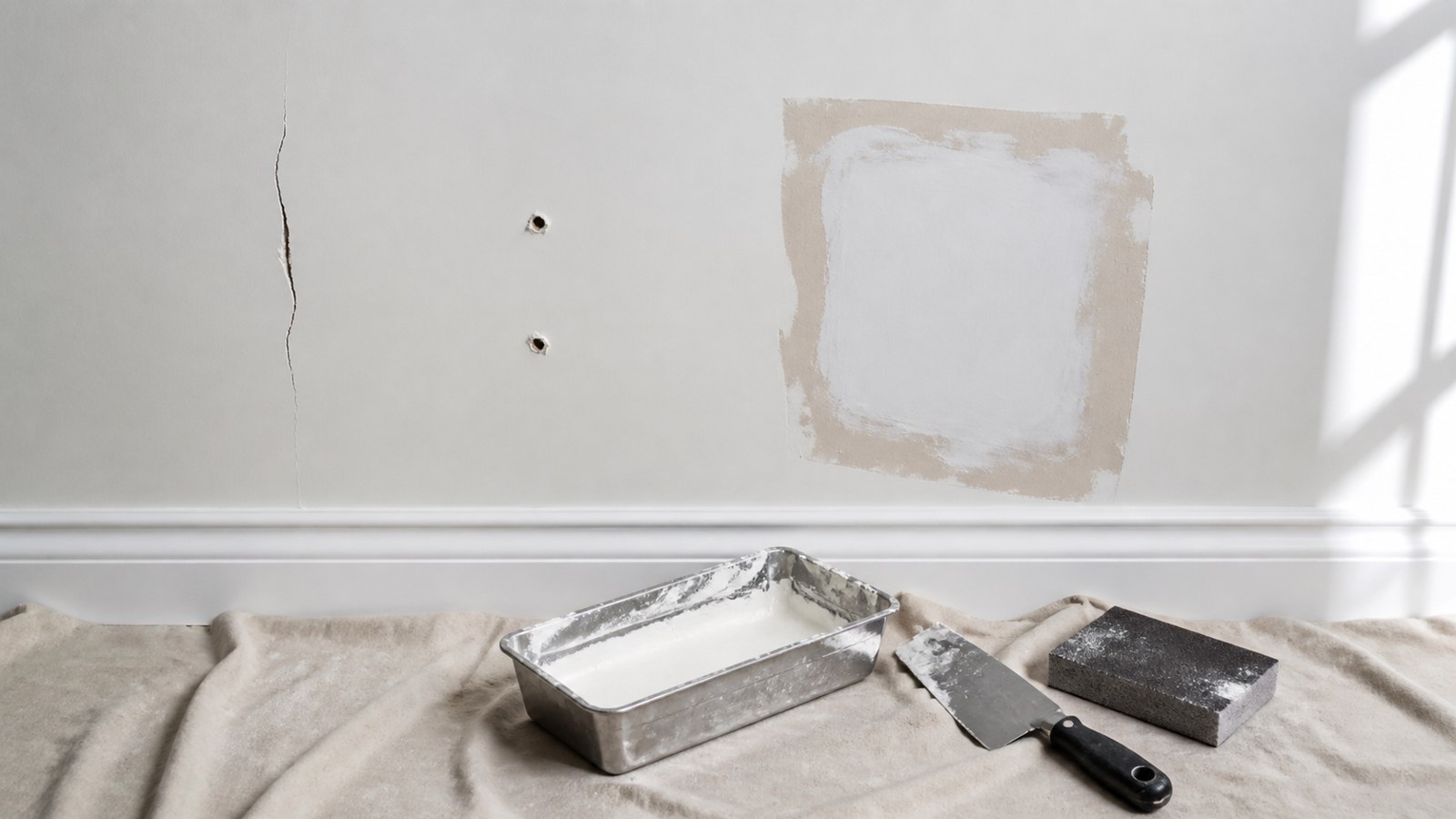
Drywall flaws are easier to fix when they are grouped by cause. Impact damage leaves crushed paper or a shallow depression. Fastener movement creates a small raised circle. Tape failure forms a ridge, bubble, or straight opening along a joint. Moisture leaves staining, swelling, softness, or peeling paint.
Walk the room before starting. Check whether damage repeats near doors, furniture paths, plumbing walls, windows, bathrooms, laundry areas, or ceiling lines. One isolated dent can be a quick patch. A pattern of cracks or stains should be treated as evidence, because the wall may be reporting movement, water, or poor fastening.
Build a Small Repair Kit
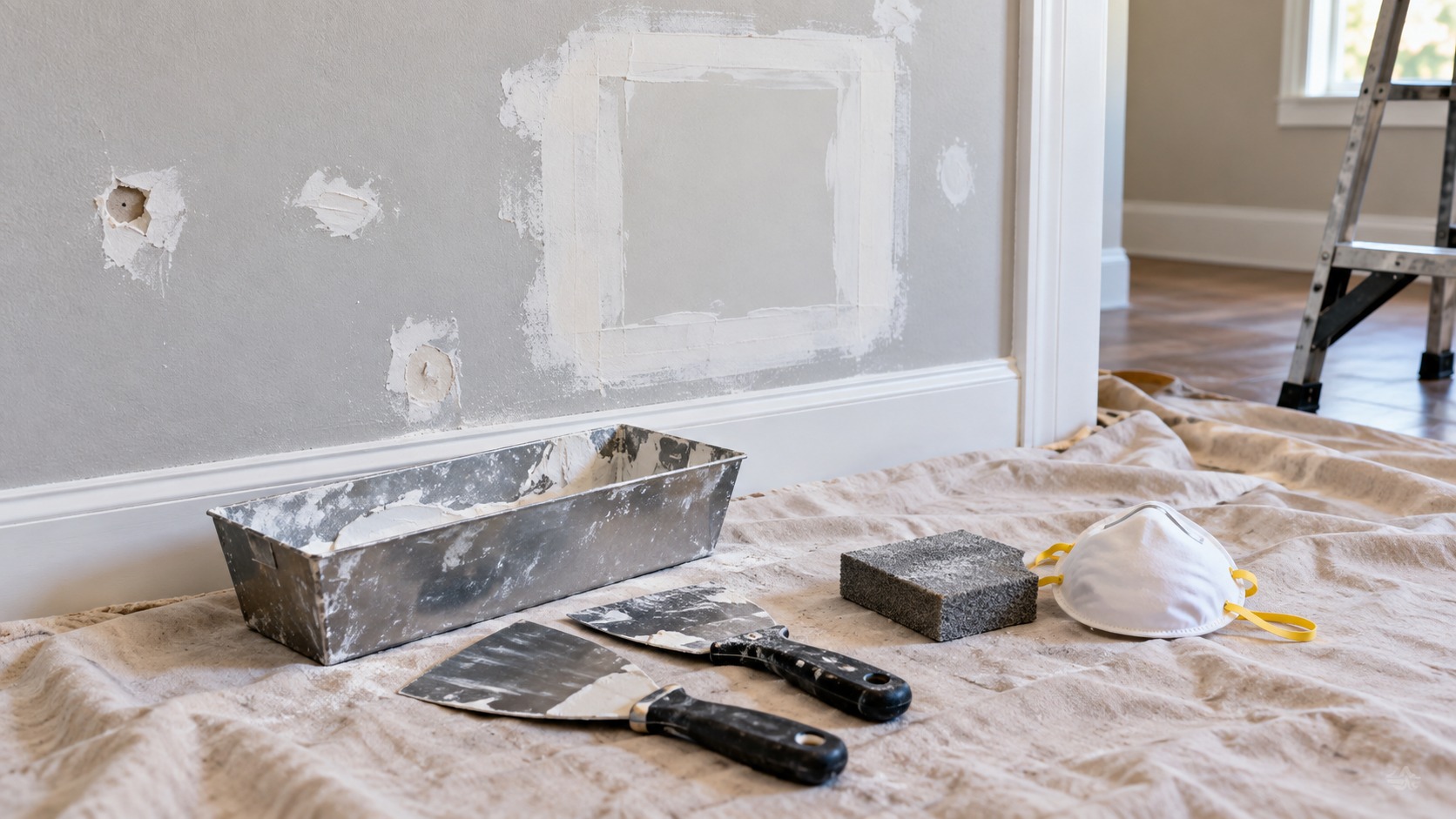
A practical drywall kit does not need to be complicated. Keep a sharp utility knife, sanding sponge, drywall knives in a few widths, dust mask, primer, compound, screws, backing material, tape, a small work light, and a clean bucket or tray nearby. The kit should support diagnosis, shaping, filling, sanding, and priming.
Match supplies to the repair. Tiny holes do not need the same setup as a loose seam. A large opening needs backing and a patch piece. A stain needs primer that blocks discoloration. Having the right materials nearby prevents the half-finished wall from sitting open while you hunt for a missing tool.
Fix Dents Without Overbuilding
Most small dents need less material than people expect. Scrape away loose paint, cut off raised paper fibers, and check that the area is firm. Fill only the low area first, then spread the next pass wider so the edge blends into the painted wall.
A high patch is harder to hide than a shallow dent. Let the first coat dry, feel it with your fingertips, and add a thin finish coat only where the surface still drops away. Prime after sanding, because bare compound absorbs paint differently than the existing wall.
Reset Fastener Bumps
A popped screw or nail means the board moved or the fastener no longer sits correctly. Covering the bump may hide it for a while, but the mark can return if the panel is still loose. The goal is to pull the drywall snug to framing again.
Add a drywall screw near the raised spot and sink it just below the paper without breaking through. Remove or reseat the original fastener if it stands proud. Then coat the area in light passes, keeping the patch wide enough that the new dimples do not show as small islands under paint.
Stabilize Torn Paper
Torn facing paper is common after adhesive hooks, wallpaper, mirrors, taped decorations, or old caulk come off the wall. Ragged edges should be trimmed so the repair starts from a clean boundary. Brown paper should not be soaked with wet compound before it is sealed.
Use a primer or sealer suited to damaged drywall paper, let it dry, and then skim the repair. This small pause keeps the paper from swelling and creating a fuzzy edge. After the skim coat is sanded, prime again so the painted finish does not reveal the repair as a dull spot.
Rebed Failed Tape Seams
Loose tape needs removal or rebedding, not another heavy coat over the lifted edge. Cut the loose portion back to bonded tape, clean out crumbly compound, and make sure the drywall behind it is dry and solid. If the joint moves, add fastening before taping again.
Bed the replacement tape in a controlled layer of compound and wipe out excess without starving the joint. The following coats should widen the repair gradually. A seam that is too narrow often leaves a raised line, especially when light crosses the wall from a window or hallway fixture.
Read Cracks by Direction
Cracks are not all the same. A fine crack along a taped joint may be a finish failure. A diagonal crack near a door or window can point to movement. A ceiling crack with staining may be connected to moisture. A crack that comes back after a previous repair needs more investigation.
Open loose edges carefully and press around the crack. If the board shifts, secure it before finishing. If the crack follows a seam, tape it. If it appears in several places or keeps widening, pause the cosmetic work and look for settling, leaks, vibration, or framing issues that will keep stressing the repair.
Treat Stains as Evidence
A brown ceiling mark, a gray patch near a window, or peeling paint beside a bath fan should not be treated as a paint problem first. Find out whether water is still entering the wall or ceiling. Check plumbing, roof areas, exterior walls, condensation, appliance lines, and ventilation.
After the source is stopped and the drywall is dry, decide whether the panel can stay. Firm stained drywall can often be sealed and repainted. Swollen, soft, moldy, sagging, or crumbling drywall should be cut out so the repair is built on sound material.
Repair Holes With Support
Small nail holes can be filled directly. Larger openings need a patch that is supported from behind or tied into surrounding drywall. If the new piece floats, the finish can crack when the wall is bumped or when compound dries.
Square or straighten the damaged opening enough to make a clean patch. Add backing strips or clips, fasten the new drywall piece, tape the edges, and build the surface in coats that spread beyond the cut line. The patch should feel like part of the wall before texture and paint begin.
Rebuild Damaged Corners
Outside corners take hits from moving furniture, vacuum cleaners, boxes, and daily traffic. If the bead is only scuffed, a light repair may work. If the bead is bent, cracked, loose, or separated, the corner needs to be secured or partially replaced.
Press gently along the corner. Movement means the bead is not stable enough for a lasting coat. Fasten or replace the damaged section, then rebuild both faces of the corner with thin passes. Keep checking the line from different angles so the finished edge does not wander.
Use Compound for the Job
Different repairs benefit from different products. Lightweight filler is convenient for tiny marks. Premixed joint compound is easy to sand and useful for many finish coats. Setting compound can help with deeper areas or faster base coats, but it requires a cleaner working rhythm.
Choose the product for the depth, strength, drying time, and finish you need. Avoid using flexible sealants as wall filler, because they do not sand or paint like drywall compound. A repair that starts with the wrong material often creates more sanding and a worse blend.
Work in Thin Controlled Coats
Drywall finishing rewards restraint. A thick coat looks efficient while it is wet, then shrinks, cracks, drags, or leaves a hump that takes extra sanding. A thinner first coat can fill the main low area, while later coats widen and refine the surface.
Let each layer dry or set before judging it. Sand only enough to remove ridges and rough spots. If the surface still needs more build, add another thin pass instead of trying to grind a thick patch into shape. Controlled layers save time by preventing big corrections later.
Feather the Patch to the Room
The right repair width depends on visibility. A closet patch can be compact. A hallway wall, stairwell, living room, or area beside a bright window may need a much broader feather. The wall does not care how small the original flaw was; it shows changes in plane and texture.
Use wider knives as the patch grows. Keep the pressure firmer near the center and lighter at the edges. Step back often and look across the wall. A patch should fade out gradually rather than stop at a hard border that catches light.
Sand With a Work Light
Overhead light can hide ridges. A small work light held low across the repair reveals shadows, scratches, pinholes, and raised tape edges. Use that light before primer so flaws can be corrected while the surface is still easy to adjust.
Sand gently and keep the abrasive clean. Digging into the wall can expose tape, fuzz the paper, or create a hollow spot around the patch. Vacuum dust and wipe the area before primer. Dust left behind can make the paint finish look rough or weak.
Match Texture Conservatively
Texture is often the reason a repair remains visible after the wall is painted. Smooth walls, orange peel, knockdown, brush texture, and roller texture all need different approaches. Start lighter than you think, because heavy texture is harder to disguise.
Practice on scrap cardboard or a leftover drywall piece when the texture will be visible. Let the test dry before comparing it to the wall. Wet texture can look fuller than it will after drying, and a small test helps keep the final wall from looking patched.
Prime Before Judging Paint
Fresh compound is porous. Painted wall surface is not. If paint goes directly over a patch, the repaired area can show as a different sheen even when the color is correct. Primer evens out absorption and makes the finish coat more predictable.
Use ordinary drywall primer for clean patches and a stain-blocking primer for discoloration, smoke, tannin, or old water marks. Let primer dry fully and inspect again. Primer sometimes reveals a ridge or scratch that was hard to see on bare compound.
Blend Paint With the Whole Wall
Touch-up paint depends on age, sheen, applicator, sunlight, cleaning history, and wall texture. Paint from the same can may still stand out if the surrounding wall has faded or collected years of use. Test a small area before assuming the patch will disappear.
Feather the paint outward from the repair and use the same roller nap or brush style when possible. On a highly visible wall, repainting from corner to corner may be cleaner than trying to hide a small touch-up in open space.
Prevent the Same Damage
A repair is stronger when the cause is removed. Door handle holes need a stop. Chair scuffs may need spacing, pads, or a rail. Garage dents may need protection where tools and bins touch the wall. Laundry and utility areas may need more clearance around appliances.
Look at how the damage happened before putting supplies away. A small bumper, a moved hook, or better storage can prevent the new patch from becoming the next repair. Drywall is easier to maintain when the wall is not asked to absorb the same hit every week.
Pause When the Wall Warns You
Some wall damage belongs outside a quick patch. Repeated water marks, soft drywall, spreading cracks, sagging ceilings, mold, bulging panels, and diagonal cracks near openings can point to active problems. Smooth compound will not solve movement or moisture.
Stop when the repair uncovers unsafe wiring, plumbing concerns, structural movement, active leaks, or material that will not stay solid. Bringing in the right help at that point protects the house and keeps a cosmetic project from hiding a larger failure.
Final Drywall Repair Review
A fast drywall repair still needs a deliberate order. Identify the cause, confirm the surface is dry and firm, secure loose panels, cut away unstable material, add backing when needed, rebuild in thin coats, sand with side light, match texture, prime, and then paint.
The best result is not the thickest patch or the quickest cover-up. It is a repair that sits flat, stays bonded, blends with the room, and removes the reason the damage happened. When the wall is treated that way, small repairs stay small and larger repairs stop advertising themselves.