Choose the Way a Window Works Before Choosing Its Look
A window that looks perfect in a catalog can become awkward above a deep counter, beside a busy walkway, or behind a sofa. Window style determines how you open the room to air, reach the glass for cleaning, arrange furniture, and manage views. Start with those everyday tasks, then compare appearance, frame material, and glass options. A bedroom may need an operable unit that satisfies applicable escape requirements, while a high wall opening may serve mainly to borrow daylight. Some rooms benefit from a combination of fixed and operating sections. Understanding the basic types helps you ask better questions and avoids paying for a feature that does not suit the room. The useful choice is an assembly that works with both the household and the wall around it. For a quick shortlist, compare hung units where an outward sash would obstruct a path, casements where reaching across a counter is the main problem, and fixed glass where ventilation is supplied elsewhere. Try the actual controls before choosing: room function narrows the field more effectively than a style name.
A: A reachable casement or awning control may help; test clearance from the faucet.
A: Their sashes generally move within the frame rather than swinging outward.
A: It stays closed; ventilation must come from another suitable arrangement.
A: No. Cleaning features depend on the specific product.
A: No. Evaluate views from elevated neighboring positions and nighttime lighting.
A: Its projection introduces support, flashing, insulation, and finishing considerations.
A: No. Frame and operating components reduce the usable opening.
A: Different room needs can justify different operations within a coordinated exterior.
A: No. Wind-driven water and product operating limits still apply.
A: Resolve operation, room use, dimensions, performance, and installation needs first.
Separate Window Style From Frame and Glass
Style describes the operating arrangement or overall configuration. A casement has a hinged sash, a slider moves sideways, and a fixed picture window stays closed. Material describes the frame, while glazing describes the glass assembly. These choices interact, but they are not interchangeable descriptions. Asking for a vinyl window says little about whether it opens or how someone will reach its hardware.
Compare the actual configuration being offered. Two units with similar outside dimensions can have different frame widths, visible glass areas, and opening clearances. Bring room photographs to the supplier and explain how the space is used. Product drawings and an operating display are more informative than a single exterior photograph, especially when screens or projecting sashes affect daily use.
Single-Hung and Double-Hung Windows
Hung windows move vertically within the frame. A single-hung design generally has one operating sash, while a double-hung design has two. They suit many traditional facades and do not project outward across a path. The vertical movement can be convenient where exterior clearance is limited, provided the person using the window can reach and operate it comfortably.
Look closely at locks, balances, screens, and cleaning arrangements. Some products allow sashes to tilt inward for cleaning, but that capability is not universal. Try the mechanism rather than assuming the word double-hung guarantees a particular maintenance feature. Heavy sashes and high locks can be awkward for someone with limited reach or grip.
Furniture matters here. A deep sofa can make the bottom sash difficult to lift, and a high counter can make a lock hard to reach. Test the intended operating position using the room’s actual dimensions. A familiar style is useful only if the household can operate the particular unit without climbing or leaning unsafely.
Casements for Reach and Opening Control
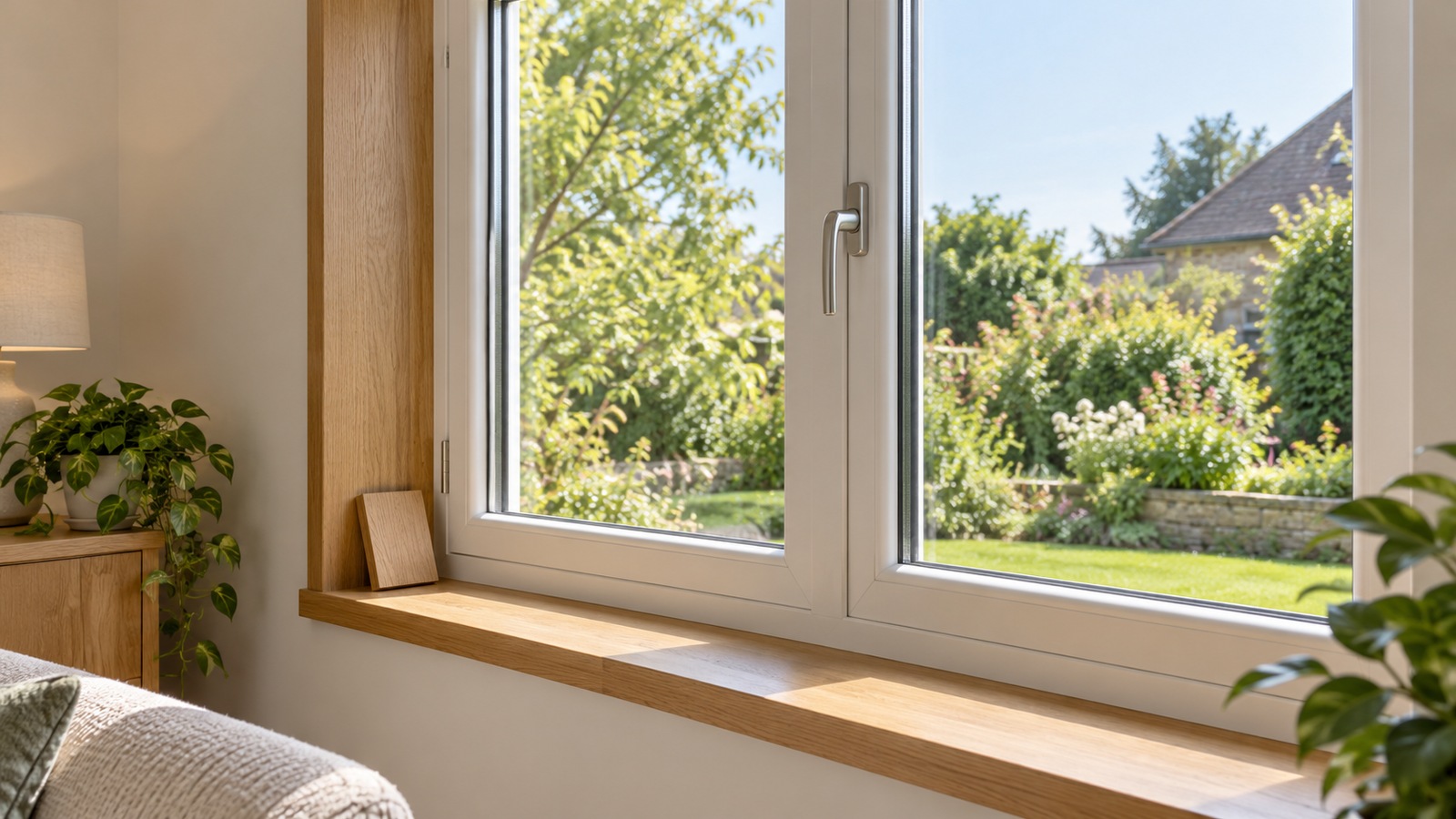
A casement sash swings on side hinges, commonly operated by a crank or handle. The operating control may be easier to reach over a counter than the meeting rail of a hung window. Check how far the sash projects and whether nearby plants, walls, shutters, or paths interfere. A casement can be an excellent practical choice, but its outward swing needs real space rather than a blank area on a floor plan. Demonstrate the lock and screen arrangement before selecting the final configuration.
Awning Windows Above Counters and Other Openings
Awning windows hinge at the top and typically project outward at the bottom. They can provide an operating section above a fixed pane or in a high wall. Their proportions often work where a broad, relatively shallow opening is desired. As with casements, verify that the operator can be reached and that the projecting sash will not conflict with movement outside.
Do not treat the open sash as reliable rain protection. Wind-driven water and product limits still matter. Close windows when conditions require it and follow the manufacturer’s operating guidance. If the purpose is ventilation in a difficult room, think about the complete ventilation strategy rather than expecting one small opening to resolve persistent humidity.
Sliders Where Sideways Movement Fits
A horizontal slider moves one or more sashes sideways. It offers a broad view without an outward-projecting panel. That can suit a room facing a narrow side yard, although opening area and access depend on the exact configuration. Look at how the moving sash overlaps the fixed portion and how that affects the usable opening.
Tracks need cleaning, and the effort involved depends on the frame detail. Ask how the sash can be removed or serviced, if applicable. Evaluate the handle height and locking action in person. A wide window is not automatically easy to operate if the user must reach around furniture or push a poorly positioned sash.
Sliding configurations also affect screen access and exterior cleaning. A fixed half may be difficult to reach from inside even when the operating half seems convenient. Discuss the actual maintenance route for upper-floor installations. The safest cleaning plan should be established before the unit is ordered rather than improvised after installation.
Picture Windows for Light and an Uninterrupted View
A picture window stays closed and can provide a clean view with fewer interruptions from operating hardware. It works well where opening the window is unnecessary and other arrangements provide the required ventilation and escape functions. Large fixed glass still needs a practical cleaning plan and an appropriate specification for its location. Consider glare, solar exposure, privacy, and furniture placement alongside the scenery. A dramatic view is pleasant only when the room remains comfortable through the day.
Combine Fixed and Operable Sections Deliberately
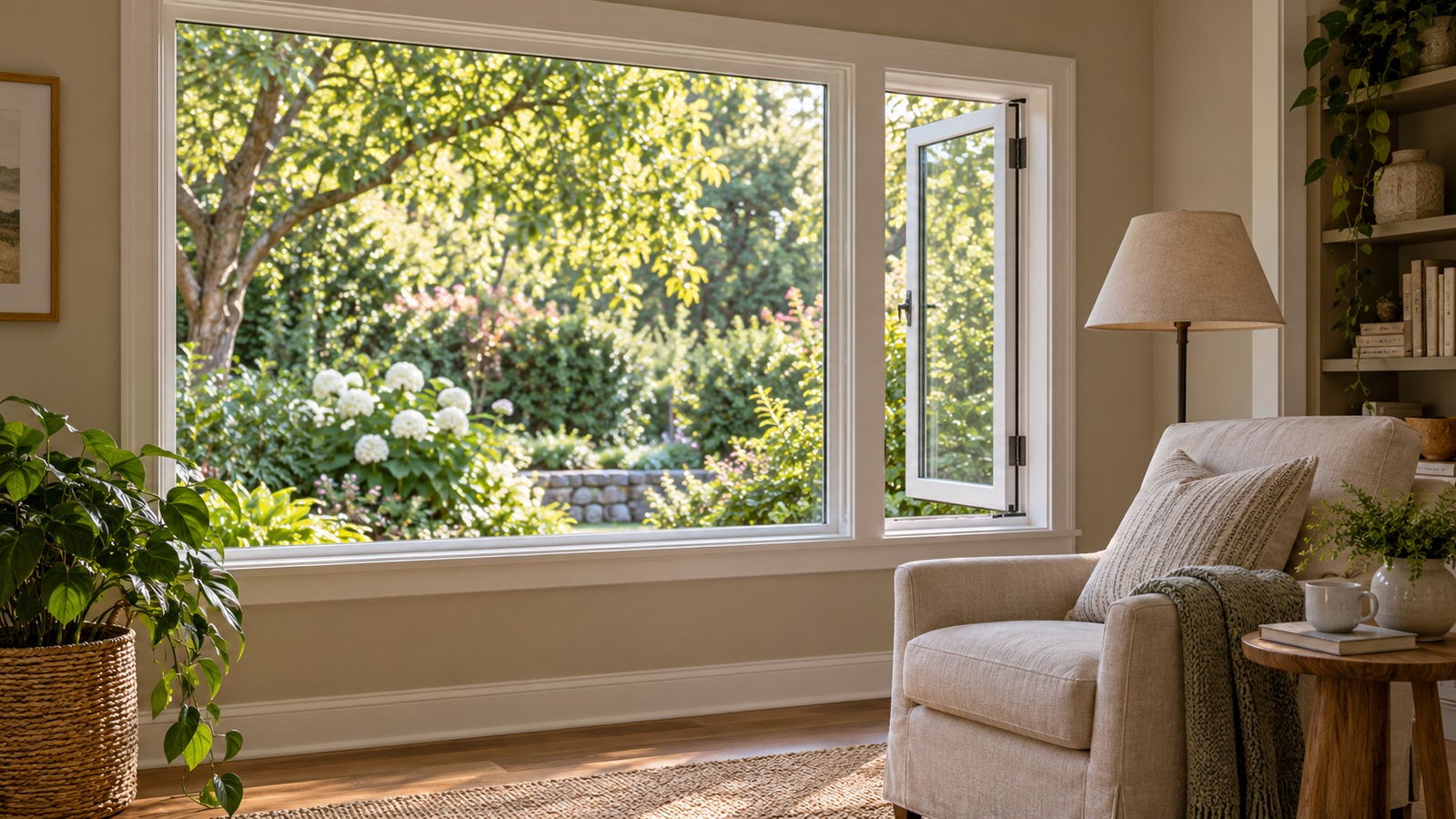
A central fixed pane with smaller operating windows on either side can balance view and ventilation. Other combinations may use an awning section above or below a fixed area. Compare how the divisions relate to the room and the exterior elevation. The meeting points should feel intentional rather than merely reflecting the easiest available product sizes.
Ask the supplier how combined units are joined, supported, flashed, and warranted. A multi-part arrangement is a complete assembly, not simply several independent windows touching one another. Confirm the overall dimensions and the visible frame pattern. Where an existing opening changes, obtain the appropriate design and installation advice before ordering a configuration based only on appearance.
Bay and Bow Windows Change the Room’s Shape
A bay window projects outward with an angular arrangement, while a bow generally uses several sections to form a gentler curve. Both can add depth and create an attractive interior feature. They also introduce support, roofing, flashing, and finishing considerations beyond an ordinary flat replacement. Budget and design should address the entire projection.
Think about how the extra depth will be used. A display ledge, built-in seat, and full-height floor projection are different arrangements. A seat needs suitable support and comfortable dimensions, and any cushions must coexist with condensation management and cleaning. Avoid assuming the space will function as comfortable seating simply because it is wide enough in a photograph.
Outside, the projection can affect paths, landscaping, and architectural balance. View the proposal from the street as well as from inside the room. Ask how the underside and top will be insulated and finished as applicable. A good-looking glass arrangement cannot compensate for an unresolved building-envelope detail.
High Windows for Privacy and Furniture Space
Clerestory or other high-set windows can introduce daylight while preserving wall area below. They may suit bedrooms, bathrooms, or rooms with nearby neighboring buildings. Their usefulness depends on orientation, sill height, and the relationship to people outside. High placement does not guarantee privacy from an elevated viewpoint.
If a high unit opens, consider how it will be operated and maintained. Remote mechanisms introduce equipment and service needs, while a manual handle may be impractical. Fixed high glass avoids an opening mechanism but still needs cleaning access. Keep these practical tasks in the design conversation alongside daylight and appearance.
Match the Window to Bedroom Responsibilities
A bedroom window can carry responsibilities beyond providing light. Applicable emergency escape and rescue opening requirements depend on the jurisdiction, building, and project scope. Ask the local authority and supplier to verify the actual proposed configuration, including clear opening and operating arrangements. A product described as a bedroom window is not proof of compliance, and a nominal frame size does not establish the usable opening. Do not replace a required operable opening with fixed glass without resolving those obligations first.
Work Around Kitchen and Bathroom Conditions
In kitchens, check reach over the countertop and clearance from faucets or backsplash details. Operate a sample using a position similar to the actual installation. A crank that collides with a tall faucet or a lock that cannot be reached will be irritating every day. Confirm how the selected trim meets nearby cabinetry and tile.
Bathrooms combine moisture, privacy, and cleaning needs. Obscured glass may help, but review it under different lighting conditions rather than assuming every pattern conceals silhouettes equally. Window placement and ventilation are separate decisions. A room that needs reliable moisture removal should not rely solely on occupants remembering to open a sash after every shower.
Glass safety requirements can depend on the window’s position near tubs, doors, and other conditions. Have the supplier confirm the appropriate specification for the actual location. Explain the surrounding room geometry rather than ordering a generic bathroom unit. This is another reason to provide photographs and measured context during selection.
Think Through Screens, Coverings, and Cleaning
Window coverings interact with handles, inward-moving parts, and frame depth. Check the finished mounting space for blinds or shades before assuming an existing treatment will fit. Screens may sit inside or outside depending on the operating design. Ask how they are removed and stored if seasonal use matters to your household.
For cleaning, trace the complete task from inside and outside. Tilt features can help on some models, but not every pane or frame surface becomes accessible. Consider upper stories, steep ground, and fixed sections. Choose a maintenance arrangement you can carry out safely, and include professional cleaning access where that is the realistic solution.
Plan How the Window Will Be Controlled Over Time
If reaching the sash is already difficult, compare accessible manual operation with a documented remote-control option before ordering. A powered operator adds a motor, controls, wiring or batteries, and a service route. Ask what happens during a power failure and how someone closes the unit when its normal control is unavailable. An inaccessible manual fallback may defeat the reason for choosing powered operation.
Discuss assistance and security together. A caregiver may need a straightforward way to operate the window, while the household may also need child-safety features appropriate to the room. Have the supplier explain compatible opening-control devices and their release procedures. Required emergency escape must remain usable under the applicable rules; an improvised added lock is not an accessibility solution.
Include control replacement in the decision. Find out whether a lost remote can be replaced, whether the operator depends on an account or network, and who can service the hardware locally. A simple, reachable mechanism can be preferable where reliable long-term support is uncertain. Compare these responsibilities before paying for an option that merely looks convenient in a demonstration.
| Style | Useful starting point | Limitation to resolve |
|---|---|---|
| Hung | Traditional rooms beside exterior paths | Lift effort and lock reach |
| Casement | Kitchen counters with reachable controls | Outward swing and faucet clearance |
| Slider | Broad openings beside narrow yards | Track care and fixed-pane cleaning |
| Picture | Living-room views with ventilation elsewhere | No opening for air or escape |
| High awning | Privacy-oriented daylight layouts | Control access and projection |
Review Air Leakage and Comfort Alongside Operation
Operating style influences the seal arrangement, but performance depends on the specific product and installation. Department of Energy guidance distinguishes window operation from frame and glazing technologies. Compare rated values for the units under consideration instead of assuming all casements or all sliders perform identically. Correct installation and a sound opening remain essential. Your selection should fit the climate and room exposure as well as the way the sash moves.
Make the Final Choice From the Room Outward
Stand where you will actually open, close, and look through the window. Imagine furniture, screens, coverings, and the open sash in place. Then evaluate the exterior appearance and the installation detail. This sequence gives everyday use a clear place in the decision rather than allowing a facade photograph to settle everything.
Keep a short schedule for each room with the chosen operating style, reason, and unresolved checks. Confirm dimensions and applicable requirements before ordering. A consistent exterior can still use different operating arrangements where the rooms need them. The best window type is the one whose advantages remain useful after the installation crew has left.