Best Wood for Live-Edge Resin Furniture (And What to Avoid) Starts With a Clear Job Requirement
Best Wood for Live-Edge Resin Furniture (And What to Avoid) becomes much less confusing when the project starts with the actual job requirement. Homeowners and makers often compare products, materials, or methods before defining the condition of the space, the skill level involved, and the consequence of a mistake. This guide walks through live-edge wood selection in a practical way, so the choice supports the finished result instead of creating hidden problems later. It also shows where patient setup, measured decisions, realistic expectations, simple tests, and careful stopping points protect the project from avoidable rework and keep the finished work easier to maintain over time, especially after normal household use begins.
How Good Wood Traits Affects the Result
For How Good Wood Traits Affects the Result, the useful question is how it changes the finished result. If it does not match the conditions on site, slow down and revise the plan. For best wood for live-edge resin furniture, this should be checked alongside Kiln-dried slabs reduce moisture surprises so the plan reflects the actual job instead of a broad rule.
This part of Best Wood for Live-Edge Resin Furniture (And What to Avoid) deserves its own check because How Good Wood Traits Affects the Result can change the sequence. Pair it with the surrounding material, because the weak point is rarely isolated. When that point is combined with Color contrast helps resin and wood complement each other, the homeowner gets a clearer sense of what can proceed and what needs a pause.
A better approach to How Good Wood Traits Affects the Result is to compare the goal with the existing room or system. Keep Hardwoods often handle furniture wear better than soft fragile slabs visible during the final check, because the finished work should be judged under normal use. The better outcome is a result that feels specific to this house, this material, and this repair rather than a copied sequence.
Use Wood to Avoid to Make Better Choices
Active insect damage is not a design feature. Read that detail against the room rather than treating it as a stand-alone instruction. For best wood for live-edge resin furniture, this should be checked alongside Warped slabs can waste resin and milling time so the plan reflects the actual job instead of a broad rule.
Wet slabs can cloud resin and move later. Write it down if the information will matter during reassembly, inspection, or maintenance. When that point is combined with Rotten pockets can keep spreading under finish, the homeowner gets a clearer sense of what can proceed and what needs a pause.
Punky wood may crumble under sanding and use. Keep Deep hidden checks can open after flattening visible during the final check, because the finished work should be judged under normal use. The better outcome is a result that feels specific to this house, this material, and this repair rather than a copied sequence.
What Moisture and Stability Reveals During the Job
End checking can reveal drying stress. That single check can change the tool choice, the sequence, or the point where help makes sense. For best wood for live-edge resin furniture, this should be checked alongside Moisture readings should be taken in several spots so the plan reflects the actual job instead of a broad rule.
Resin does not magically stop all movement. Let that finding shape the order of work so the final step is not carrying the whole burden. When that point is combined with Stable wood still moves with seasonal humidity, the homeowner gets a clearer sense of what can proceed and what needs a pause.
A table base should allow reasonable wood movement. Keep Dry wood makes finishing far more predictable visible during the final check, because the finished work should be judged under normal use. The better outcome is a result that feels specific to this house, this material, and this repair rather than a copied sequence.
Live Edge Prep for Best Wood for Live-Edge Resin Furniture
Fill small cracks before the main pour if needed. It is most useful when it is confirmed before the finished surface or final connection is involved. For best wood for live-edge resin furniture, this should be checked alongside Build a mold that supports the slab without gaps so the plan reflects the actual job instead of a broad rule.
Seal porous grain to reduce bubbles. Keep the next step small enough that a bad assumption can still be corrected. When that point is combined with Protect show surfaces from accidental drips, the homeowner gets a clearer sense of what can proceed and what needs a pause.
Use clamps without deforming the slab. Keep Clean dirt and loose fibers from natural edges visible during the final check, because the finished work should be judged under normal use. The better outcome is a result that feels specific to this house, this material, and this repair rather than a copied sequence.
How Furniture Design Fit Affects the Result
Base placement should support both wood and resin zones. The goal is to remove guessing while the work is still easy to adjust. For best wood for live-edge resin furniture, this should be checked alongside Sharp natural edges should be softened for daily use so the plan reflects the actual job instead of a broad rule.
The best slab fits the furniture function first. Pair it with the surrounding material, because the weak point is rarely isolated. When that point is combined with Coffee tables can showcase dramatic voids, the homeowner gets a clearer sense of what can proceed and what needs a pause.
Benches require attention to load and flex. Keep Large voids increase cost and curing risk visible during the final check, because the finished work should be judged under normal use. The better outcome is a result that feels specific to this house, this material, and this repair rather than a copied sequence.
Use Live-Edge Wood Q&A to Make Better Choices
Can softwood work? It can, but durability, resin absorption, and dents should be considered. This is where a careful homeowner can prevent a small mismatch from becoming a visible flaw. For best wood for live-edge resin furniture, this should be checked alongside How dry should the slab be? It should be appropriately dried for indoor furniture and checked with a moisture meter so the plan reflects the actual job instead of a broad rule.
When should I reject a slab? Reject it when moisture, rot, instability, or shape makes the furniture unreliable. Write it down if the information will matter during reassembly, inspection, or maintenance. When that point is combined with What wood is best for resin tables? Dry, stable hardwood slabs with sound structure and interesting grain are usually best, the homeowner gets a clearer sense of what can proceed and what needs a pause.
Should I flatten before resin? Often the slab is prepared first, then final flattening happens after curing. Keep Why seal before pouring? Sealing porous wood can reduce bubbles and resin loss visible during the final check, because the finished work should be judged under normal use. The better outcome is a result that feels specific to this house, this material, and this repair rather than a copied sequence.
What Good Wood Traits Reveals During the Job
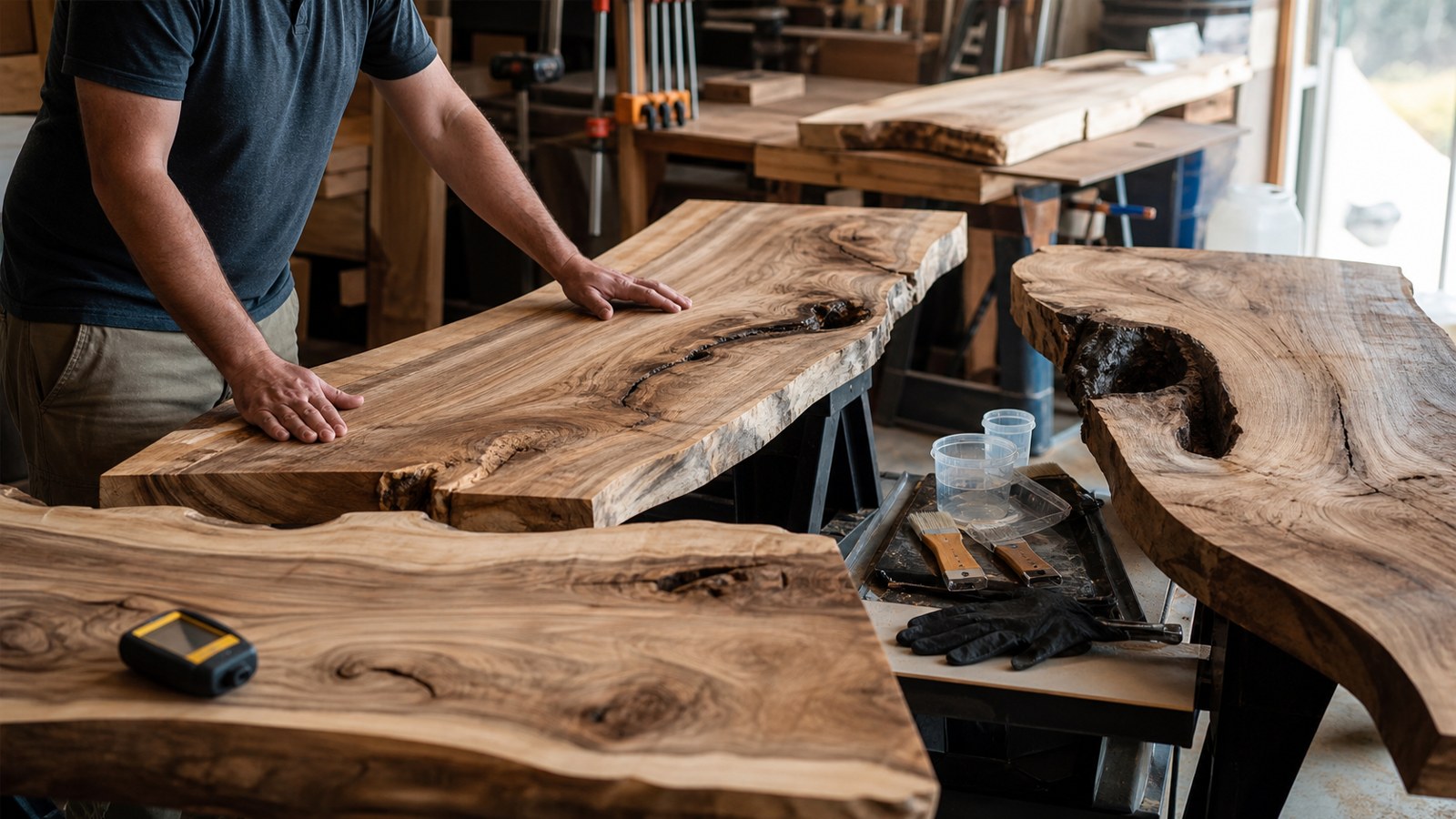
Use What Good Wood Traits Reveals During the Job to narrow the options instead of adding more guesses to the project. It gives the project a practical test instead of relying on memory or a product photo. For best wood for live-edge resin furniture, this should be checked alongside A good slab looks useful before resin is added so the plan reflects the actual job instead of a broad rule.
The safest reading of What Good Wood Traits Reveals During the Job comes from the site conditions, not from a generic checklist. Let that finding shape the order of work so the final step is not carrying the whole burden. When that point is combined with Solid edges hold resin forms more reliably, the homeowner gets a clearer sense of what can proceed and what needs a pause.
When What Good Wood Traits Reveals During the Job is handled carefully, the rest of the project becomes easier to trust. Keep Kiln-dried slabs reduce moisture surprises visible during the final check, because the finished work should be judged under normal use. The better outcome is a result that feels specific to this house, this material, and this repair rather than a copied sequence.
Wood to Avoid for Best Wood for Live-Edge Resin Furniture
Unknown moisture content makes outcomes harder to trust. Handled early, it usually creates a cleaner path through the rest of the job. For best wood for live-edge resin furniture, this should be checked alongside Active insect damage is not a design feature so the plan reflects the actual job instead of a broad rule.
Extremely thin edges may break during handling. Keep the next step small enough that a bad assumption can still be corrected. When that point is combined with Wet slabs can cloud resin and move later, the homeowner gets a clearer sense of what can proceed and what needs a pause.
Warped slabs can waste resin and milling time. Keep Loose bark often fails unless removed or stabilized visible during the final check, because the finished work should be judged under normal use. The better outcome is a result that feels specific to this house, this material, and this repair rather than a copied sequence.