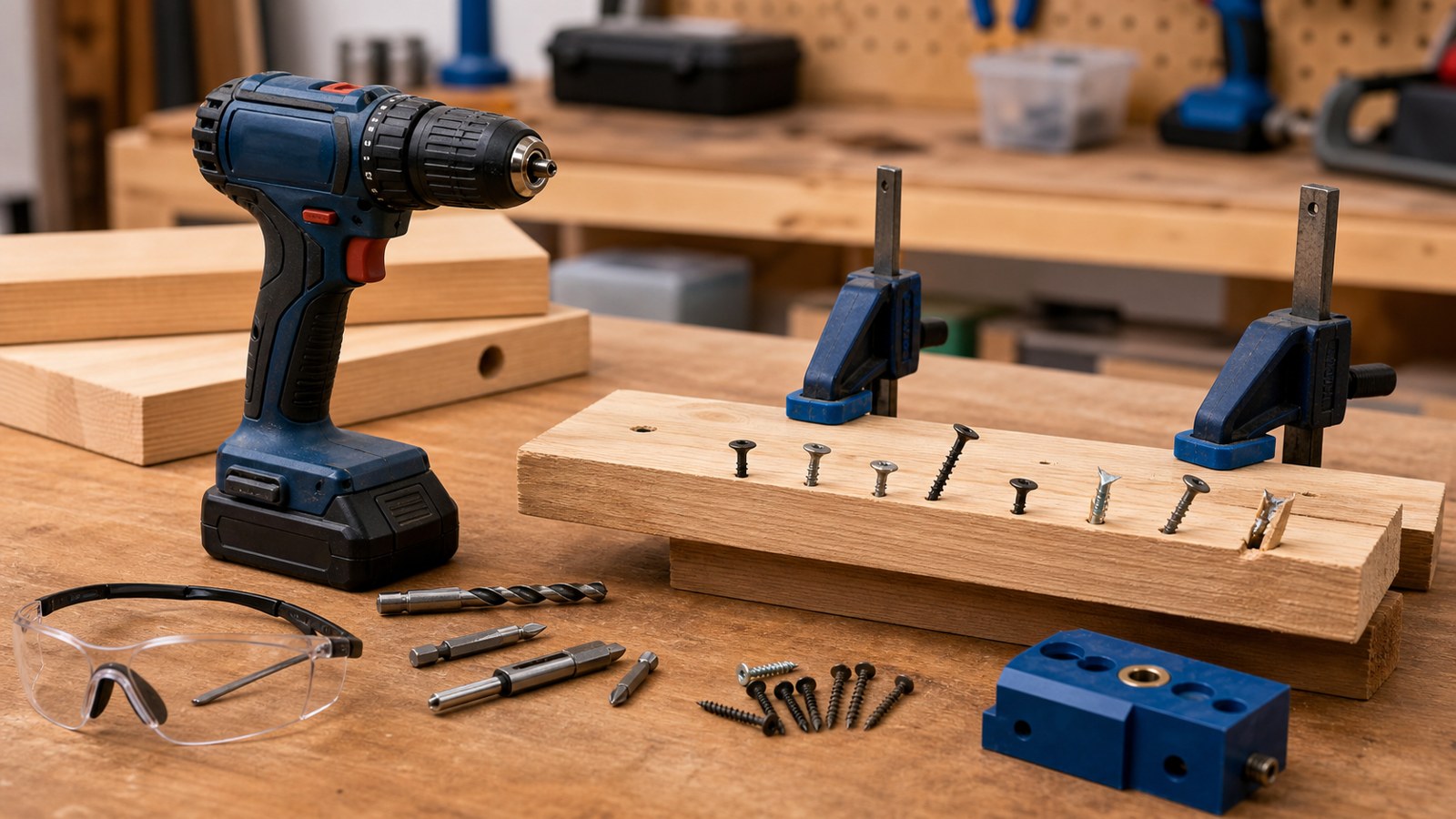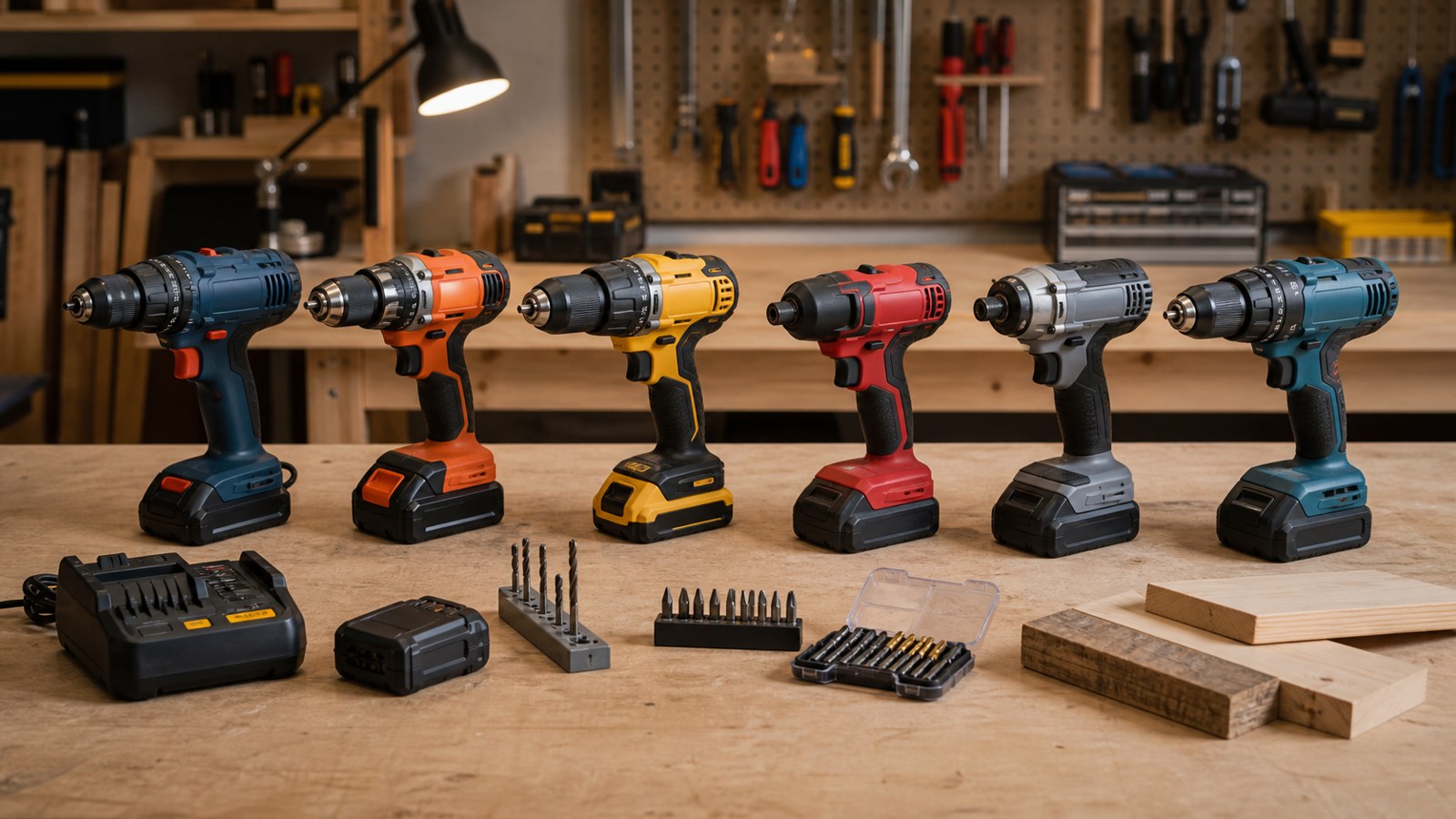
A good power drill should match the work you actually do, not just the biggest number on the box. Home repairs, cabinet hardware, shelving, deck screws, masonry anchors, furniture assembly, and large hole saws all ask different things from a drill. The right choice balances power, control, battery life, comfort, chuck size, and the bits you will use most often.
Beginners often compare drills by voltage or price alone. Those details matter, but they do not tell the whole story. A compact drill with a good clutch can be better for delicate hardware than a heavy high-torque model. A hammer drill can be useful for masonry but unnecessary for light household tasks. A cheap drill can become expensive if the battery platform, charger, and bits do not support the jobs ahead.
Use this buying guide to choose a drill that feels useful after the first project, not just impressive in the aisle.
A: Start with a cordless drill driver unless masonry or heavy fastener work is already on the list.
A: It can be excellent for furniture, hardware, light repairs, and overhead work where low weight matters.
A: Choose the larger platform for frequent drilling, outdoor repairs, larger bits, and longer work sessions.
A: Buy hammer mode when brick, block, or concrete anchors are expected more than once in a while.
A: No. It drives fasteners well, but a drill driver is usually better for clean holes.
A: A half-inch chuck is more flexible, while a smaller chuck can suit light household tasks.
A: It is worthwhile when runtime, compact size, lower heat, and frequent use matter.
A: Two batteries are best for steady work because one can charge while the other is in use.
A: Get quality driver bits, twist bits, a countersink, and masonry bits only when hard surfaces are planned.
A: Match the drill to projects, comfort, battery platform, chuck size, speed control, bits, warranty, and total cost.
Start With Your Common Projects
Before comparing models, list the projects the drill will actually handle. Hanging shelves, assembling furniture, installing cabinet pulls, drilling pilot holes, mounting brackets, driving deck screws, boring holes in studs, and setting masonry anchors all point toward different priorities.
If most jobs are indoors and light, control and comfort may matter more than maximum torque. If you plan to build decks, fences, workbenches, or outdoor structures, battery capacity, torque, and a more capable chuck become more important. If masonry is common, hammer-drill capability may be worth buying.
Do not buy for an imaginary extreme project unless that project is truly coming. A drill used weekly for small tasks should feel good during small tasks.
Choose the Right Drill Type
A drill-driver is the best first drill for most homeowners. It drills holes, drives screws, uses a clutch, and handles a wide range of wood, drywall, hardware, and light repair tasks. If you only buy one drill to start, this is usually the one.
A hammer drill adds a pulsing action for masonry. It can drill into brick, block, and some concrete with the right bit. It is useful if you regularly install anchors in masonry, but it is not needed for every household.
An impact driver is not the same tool. It is excellent for driving long screws and fasteners, but it is less suited for clean drilling and delicate hardware. Many people eventually own both a drill-driver and an impact driver, but the drill-driver is usually the more flexible first purchase.
Understand Voltage Without Chasing It
Voltage gives a rough sense of tool class, but higher voltage is not automatically better. A 12-volt drill can be light, compact, and excellent for cabinet work, furniture, small repairs, and overhead jobs. An 18-volt or 20-volt-class drill usually offers more power for larger bits, heavier fasteners, and general renovation work.
The right voltage depends on workload. If the drill will live in a kitchen drawer for light tasks, a compact model may be more pleasant. If it will build framing, deck parts, shelving, and outdoor projects, the larger platform may be worth the weight.
Also compare battery size. Amp-hours affect runtime. A compact battery keeps the drill light, while a larger battery lasts longer but adds bulk. Owning two batteries is often more useful than owning one oversized battery.
Think About the Battery Platform
The battery platform may matter more than the drill itself over time. Once you buy batteries and chargers, future tools become easier to add within the same system. Check whether the brand offers the tools you may want later: impact driver, circular saw, oscillating tool, work light, sander, blower, or nailer.
A bargain drill can be limiting if the battery system has few compatible tools or expensive replacement batteries. A slightly more expensive kit may be a better value if it includes two batteries, a good charger, and access to a strong tool lineup.
For occasional use, avoid letting batteries sit dead for long periods. Battery health affects whether the drill is ready when a repair pops up.
Compare Chuck Size
Most drills use either a 3/8-inch or 1/2-inch chuck. A 3/8-inch chuck is fine for many light household tasks. A 1/2-inch chuck accepts larger bits and is common on more capable drills. If you plan to use hole saws, larger spade bits, auger bits, or heavier drilling accessories, a 1/2-inch chuck gives more room to grow.
Chuck quality matters too. A good keyless chuck tightens securely and holds bits without slipping. If bits frequently loosen, drilling becomes frustrating and less accurate.
Try opening and closing the chuck before buying if possible. It should feel solid, not gritty or loose. The jaws should center the bit cleanly.
Look for Speed and Clutch Control
A good drill should offer variable trigger speed and at least two gear ranges. Low speed gives more torque and control for larger bits and driving screws. High speed works better for smaller holes and lighter drilling.
The clutch is important for screwdriving. It limits torque so screws do not overdrive, strip, or split the material. For beginners, a clear clutch range can prevent a lot of damage. It is especially useful for cabinet hardware, shelves, hinges, trim, and furniture assembly.
Do not ignore trigger feel. A drill that jumps from stopped to too fast is harder to control. Smooth speed control makes starting holes and seating screws much easier.
Check Comfort and Balance
Pick up the drill if you can. Grip shape, weight, balance, and battery size affect how steady the tool feels. A drill that looks powerful may be tiring overhead, awkward in cabinets, or too bulky for tight corners.
Try holding it in drilling position, screwdriving position, and one-handed carrying position. The controls should be easy to reach. The forward-reverse switch should not be confusing. The work light should actually point near the bit.
Comfort is not a luxury feature. A drill that feels stable is safer and more accurate because you are less likely to fight the tool.
Do Not Forget Bits
A drill without good bits is only half a purchase. Budget for twist bits, brad-point bits, driver bits, countersink bits, and masonry bits if your projects need them. Cheap bits can wander, burn, strip screws, and make a good drill feel poor.
Buy bits for the materials you actually use. Wood, metal, masonry, tile, and plastic may require different bit styles. A basic mixed set is useful, but add better individual bits for tasks you repeat often.
Driver bits wear out. Keep replacements for common screw types, especially Phillips, square, Torx, and hex if you use them. A worn bit can ruin fasteners and surfaces quickly.
Consider Kit Value
Drill kits often include the tool, charger, batteries, case, and sometimes bits. Compare the entire kit, not just the bare-tool price. A bare tool is cheaper only if you already own compatible batteries and a charger.
Two batteries are usually worth having. One can charge while the other is in use, and a backup battery prevents small jobs from stopping halfway through. For occasional users, two modest batteries may be better than one large one.
A hard case or bag is useful if the drill will travel around the house or to job sites. Good storage keeps the charger, batteries, and bits together.
Decide Whether You Need Hammer Mode
Hammer mode is useful for brick, block, and light concrete drilling. If you mount shelves on masonry walls, install concrete anchors, or work in basements and garages, a hammer drill may be worth it.
If you mostly drill wood, drywall, furniture, and hardware, hammer mode may sit unused. It adds cost and sometimes weight. A standard drill-driver may be a better everyday tool.
For serious concrete work, a rotary hammer is different from a hammer drill and may be the right rental or purchase. Do not expect a small hammer drill to behave like a demolition-class tool.
Brushless vs Brushed Motors
Brushless drills are usually more efficient, run cooler, and can deliver strong performance from a compact body. They often cost more but may be worth it for frequent use, longer runtime, and better durability.
Brushed drills can still work well for occasional projects and may be cheaper. If the drill will be used lightly, a quality brushed model can be a reasonable buy. If it will see regular renovation work, brushless is often the better long-term choice.
Do not choose only by the motor label. A comfortable, well-built brushed drill may be more useful than a poorly balanced brushless model in the wrong battery platform.
Match Features to Real Use
Useful features include an LED work light, belt clip, clear battery gauge, all-metal chuck, side handle for high-torque work, compact head length, and good case storage. Not every feature matters for every user.
A side handle can improve control with large bits or hole saws. A compact head helps inside cabinets. A bright light helps in closets and basements. A battery gauge helps prevent surprise shutdowns.
Ignore features that do not support your work. The best drill is not the one with the longest feature list; it is the one that solves your common jobs cleanly.
Think About Weight Over a Full Project
A drill that feels fine for ten seconds in a store can feel heavy after installing a full set of shelves or drilling overhead into blocking. Weight matters most when the tool is used above shoulder height, inside cabinets, or for repetitive fastener work.
Battery size changes the feel. A compact battery may be easier for hardware and finish work, while a larger battery may be better for long outdoor projects. If the kit includes multiple battery sizes, use the lighter one when control matters more than runtime.
Balance matters as much as total weight. A drill that tips forward can tire your wrist, while a well-balanced drill feels steadier even if the scale says it weighs a little more.
Check Warranty and Parts Availability
Warranty support is part of the buying decision. Batteries, chargers, chucks, switches, and cases can fail or wear out. A tool from a brand with easy warranty service and available replacement batteries is safer than a mystery kit that cannot be supported later.
Read what the warranty covers and how claims are handled. Some warranties are excellent on the tool but shorter on batteries. Others require registration. Keep the receipt, model number, and serial number with the charger or in a project file.
Replacement batteries are especially important. If a battery costs nearly as much as a new kit, the bargain may not stay a bargain.
Avoid Common Buying Mistakes
One common mistake is buying the cheapest drill and then fighting weak batteries, poor chuck grip, and rough trigger control. Another is buying a heavy professional kit for light household work and avoiding it because it feels bulky.
Do not assume every combo kit is a good value. Some kits include tools you will not use, small batteries that limit performance, or accessories that are lower quality than they appear. Compare the drill, batteries, charger, and bit needs separately.
Also avoid buying without holding the tool if possible. Specs can narrow the list, but the grip, trigger, balance, and controls decide whether the drill feels trustworthy in your hand.
Choose the Right First Kit
For most beginners, the best first kit is a cordless drill-driver with two batteries, a charger, a usable case or bag, and a small set of decent bits. That setup handles repairs, assembly, shelves, brackets, pilot holes, and many weekend projects without locking you into a specialty tool too early.
If masonry work is already on the list, choose a hammer-drill kit. If long screws and outdoor projects are common, consider a drill-driver and impact-driver combo. If the work is mostly light hardware and furniture, a compact drill-driver may be the smarter everyday buy.
Final Power Drill Buying Review
For most homeowners, a comfortable cordless drill-driver in a strong battery platform is the best first choice. Choose 12 volts for compact light-duty work, or an 18-volt or 20-volt-class model for broader home repair and renovation. Add hammer mode if masonry is a regular part of the plan.
Compare the full kit: batteries, charger, chuck size, clutch, speed control, comfort, bits, and future tool compatibility. A drill bought this way is more likely to stay useful long after the first project is finished.