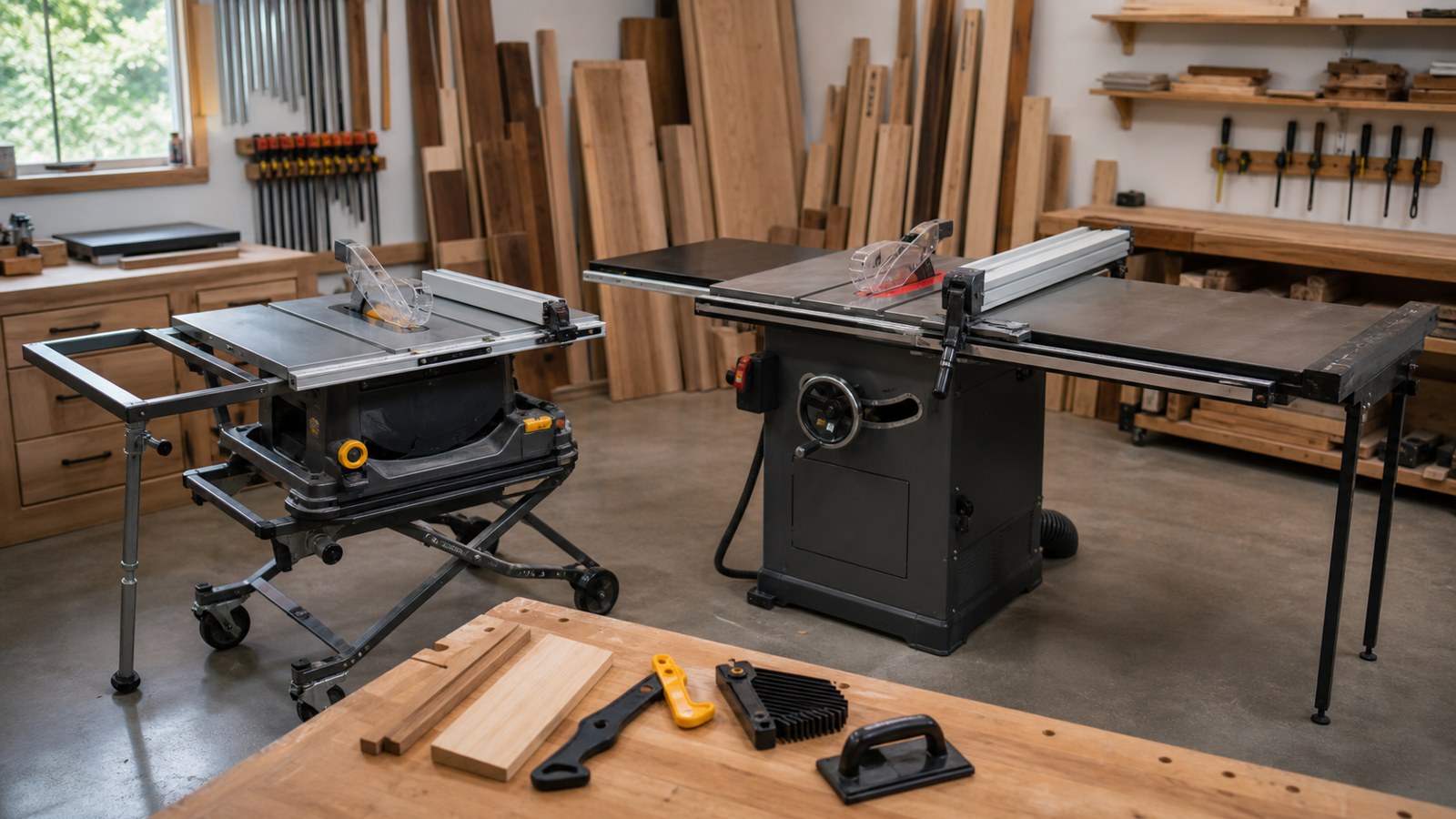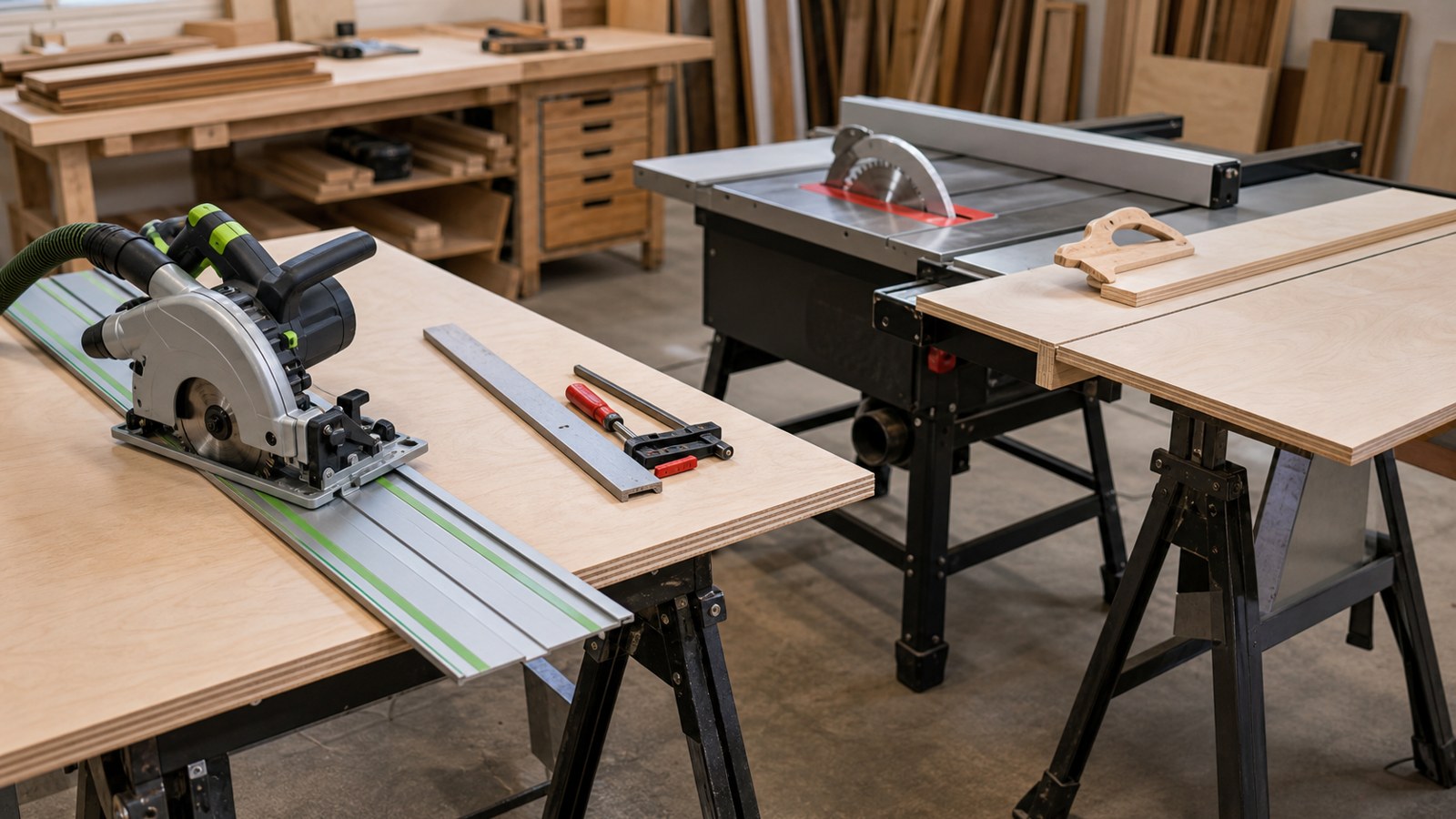
A circular saw and a table saw both cut wood, but they solve different problems. A circular saw moves across the material, which makes it portable and useful for breaking down boards or sheet goods wherever the work is. A table saw stays in place while the material moves past the blade, which makes it better for repeatable cuts when the shop has enough room.
The right choice depends on the projects you actually plan to build. A homeowner cutting deck boards, fence rails, plywood panels, framing lumber, and rough project parts may get more use from a circular saw. A woodworker making cabinet parts, repeated strips, furniture components, and precise rips may eventually want a table saw.
Use this guide to decide which saw belongs first, when one tool can cover the job, and when the second saw becomes worth the space, cost, and safety habits it requires.
A: Buy for your next projects: circular saw for portable breakdown work, table saw for repeated rip cuts.
A: It can be, but only with good alignment, support, blade choice, and technique.
A: Yes, with a sharp blade, stable support, and a clamped guide or track.
A: A circular saw stores more easily, while a compact table saw still needs working clearance.
A: Both require respect; safety depends on the cut, support, blade path, and operator habits.
A: Long boards need support on either tool so they do not tip, bind, or pull the cut off line.
A: Circular saws usually cost less upfront, but guides and supports still belong in the budget.
A: It becomes valuable when repeatable rips, narrow strips, and matching parts are common.
A: Yes. The right blade changes cut quality, speed, splintering, and control.
A: Many DIYers do, but the second saw should answer a real project need.
How the Tools Cut Differently
With a circular saw, the board or sheet usually stays supported while the saw moves through the cut. That makes the tool useful in a driveway, garage, jobsite, backyard, or small workspace. The tradeoff is that the cut depends heavily on the guide, support, blade, and steadiness of the operator.
With a table saw, the blade stays fixed in the table and the workpiece is pushed through. The fence controls the width of a rip cut, and the table supports smaller parts well. The tradeoff is that the material must be controlled as it moves, and long or heavy pieces need infeed and outfeed space.
Neither tool is automatically more professional. The better choice is the one that lets the material stay controlled from the first inch of the cut to the last.
Choose a Circular Saw for Portability
A circular saw is easier to store, carry, and use outside a dedicated shop. It can cut lumber on sawhorses, plywood on foam insulation, fence boards near the project, and framing material where the work is happening. That flexibility is valuable for homeowners who do not have a permanent workshop.
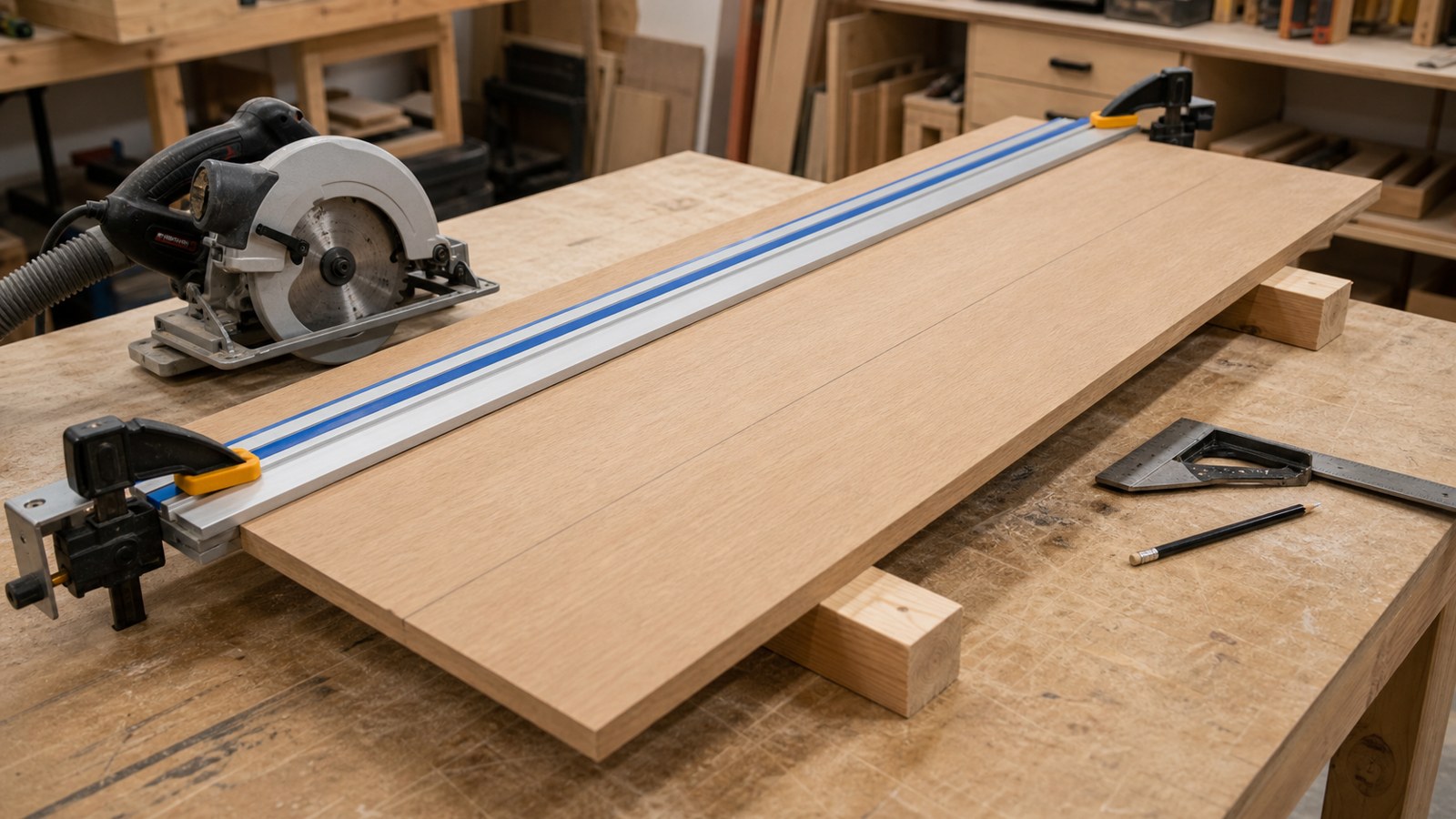
Portability also helps with large material. Full plywood sheets are awkward to lift onto a table saw, especially alone. A circular saw with a straightedge or track-style guide can break sheets into manageable pieces while the sheet stays flat and supported.
If your projects are mostly repairs, outdoor builds, shelving, rough sizing, and occasional plywood cuts, a circular saw may be the first saw to buy. It asks for careful setup, but it does not ask for a large shop footprint.
Choose a Table Saw for Repeatable Rips
A table saw shines when you need multiple pieces the same width. Shelving strips, cabinet parts, face-frame stock, drawer components, trim blanks, and repeated project parts are easier when a fence stays set for the next cut. Once the saw is tuned and the fence is aligned, repeatability is the big advantage.
The table saw is especially useful for ripping narrow strips from boards or sheet goods after the material has already been sized down. It can also support jigs, sleds, featherboards, dado setups, and other shop methods that improve repeat work.
That repeat accuracy is valuable only if you have room to use the saw safely. A table saw squeezed into a cramped corner can be less useful than a circular saw with good supports.
Think About Sheet Goods
Plywood, MDF, OSB, and large panels are a common reason people compare these tools. A table saw can cut sheet goods accurately, but handling a full 4×8 sheet on a small saw is difficult and sometimes unsafe without support. The sheet can sag, twist, or pull away from the fence.
A circular saw works well for first cuts on sheet goods because the sheet can stay on foam or a low support grid. A clamped guide can produce a straight edge, and the smaller pieces can later be refined on a table saw if needed.
Many shops use both: circular saw first to break down the sheet, table saw second to make repeatable final rips. For a homeowner with limited space, the circular saw may cover most sheet goods work by itself.
Think About Long Boards
Long boards can challenge both tools. A circular saw can crosscut long boards wherever they are supported. A speed square or cutting guide helps keep the cut square. This is useful for deck boards, fence rails, studs, shelving boards, and framing lumber.
A table saw can rip long boards, but the board needs room before and after the blade. Without outfeed support, the board can tip, bind, or pull your attention away from the cut. Long stock also needs a straight edge against the fence before the table saw can make a clean parallel rip.
If your main work is cutting long boards to length, a circular saw is usually enough. If your work involves ripping boards to consistent width, a table saw becomes more useful.
Accuracy Depends on Setup
People often describe table saws as accurate and circular saws as rough, but that is too simple. A circular saw with a sharp blade, stable support, and a good straightedge can make clean, accurate cuts. A table saw with a misaligned fence, dull blade, or poor support can make bad cuts.
For a circular saw, accuracy comes from marking clearly, supporting the work, setting blade depth, clamping a guide, and keeping the shoe against the guide. For a table saw, accuracy comes from fence alignment, blade quality, flat support, safe feed pressure, and keeping the material tight to the fence.
The more repeat parts you need, the more the table saw’s setup pays off. For one-off cuts, the circular saw may reach the same practical result with less setup time.
Safety Feels Different
A circular saw has an exposed lower blade during the cut, so hand position, blade guard movement, cord placement, and work support matter. The saw should reach full speed before entering the material, and the blade should stop before the tool is set down.
A table saw leaves the blade fixed in front of the operator. Kickback is the major concern when material pinches, twists, or drifts away from the fence. Push sticks, riving knives, blade guards, featherboards, proper stance, and clear outfeed space are part of safe table saw work.
Both tools can be used safely, and both can hurt you quickly. The safer tool is the one you have room to control and enough patience to set up correctly.
Space and Storage Matter
A circular saw can live on a shelf, in a case, or under a bench. Add a straightedge, a speed square, clamps, and foam support, and the total footprint is still small. That makes it practical for apartments, shared garages, sheds, and small basements.
A table saw needs more than the footprint of the machine. It needs room to feed material into the blade and receive it after the cut. Even a portable jobsite table saw becomes awkward if there is no safe path for boards and panels.
Before buying a table saw, mark the infeed and outfeed zones on the floor. If doors, cars, storage shelves, stairs, or walls block that path, the saw may not be as useful as it looks in the store.
Dust and Noise Are Part of the Decision
Both saws make noise and dust, but they do it differently. A circular saw used outdoors or in a driveway may be easier to clean up. Indoors, it can spray dust across a wide area unless connected to a vacuum or used with careful containment.
A table saw can connect to dust collection more easily, but it still throws dust above and below the table. A small shop may need a vacuum, dust separator, air filtration, or regular cleanup habits to keep the area usable.
If you work in a shared garage or basement, dust control may decide which tool gets used more often. The saw that is easy to set up and clean up will usually see more real work.
Cost Goes Beyond the Saw
A circular saw setup may need blades, clamps, a speed square, a long straightedge, hearing and eye protection, sawhorses, or foam support. Even with those accessories, it is often the cheaper first setup.
A table saw may need a stand, outfeed support, push sticks, featherboards, better blades, a miter gauge or sled, dust collection, and enough shop organization to use it safely. The saw price is only part of the total cost.
Do not compare a bare circular saw to a fully supported table saw, or a cheap table saw to a guided circular saw setup. Compare complete working systems for the projects you expect to do.
Match the Saw to the Cut Type
Crosscuts, rips, bevels, rough sizing, finish cuts, and repeated parts all place different demands on the tool. A circular saw is excellent for rough crosscuts, sheet breakdown, and cuts where the material is too large to move comfortably. It can also make clean finish cuts with the right blade and guide.
A table saw is strongest at ripping with the grain and making repeated widths. It can crosscut with a sled or miter gauge, but it is not the easiest first choice for cutting very long boards to length. The cut type should lead the decision.
If a project has many one-off cuts in large material, the circular saw may feel natural. If a project has many repeated strips, rails, stiles, shelves, or cabinet parts, the table saw starts to earn its keep.
Blade Choice Changes Both Tools
A circular saw with a sharp fine-tooth blade and a guide can outperform a table saw with a dull general-purpose blade. A table saw with the right ripping blade can cut faster and cleaner than a circular saw forced through repeated narrow strips. The blade is part of the tool, not an afterthought.
Use framing blades for rough construction cuts, finer blades for plywood and visible edges, and specialty blades only when the material calls for them. Keep blades clean and replace them when they burn, wander, or leave ragged edges.
When comparing saws, include blade upgrades in the budget. A modest saw with a good blade often feels better than an expensive saw with the wrong blade installed.
Beginner Confidence Matters
Some beginners feel more comfortable moving a circular saw across clamped material because the setup is visible and low to the ground. Others feel more comfortable with a table saw because the fence creates a fixed reference. The right first saw should match the way you can work calmly and consistently.
Practice changes the answer. A circular saw becomes much more accurate once you learn guide offsets, support, and blade depth. A table saw becomes much safer and more useful once push sticks, fence pressure, outfeed support, and body position become habits.
Do not buy the tool that scares you into rushing. Buy the one you can set up carefully, practice with on scrap, and use without skipping safety steps.
Which Saw Should You Buy First?
Buy a circular saw first if you are doing general DIY repairs, outdoor projects, framing, fence work, deck repairs, shelving, plywood breakdown, or occasional straight cuts. It is the more flexible first saw for homeowners who need portability and limited storage.
Buy a table saw first only if you already know your projects require repeat rips, cabinet-style parts, furniture components, or small-shop woodworking. It should also fit your workspace with enough room to feed material safely.
If you are unsure, start with a circular saw and learn to use guides well. Add a table saw when you repeatedly need consistent widths, cleaner repeat cuts, or shop-based accuracy that the circular saw setup no longer handles efficiently.
When You Eventually Want Both
Many capable DIY shops use both tools because they complement each other. The circular saw breaks large material down to size. The table saw brings smaller parts to final width. This workflow is safer and calmer than wrestling full sheets or long boards through a small table saw.
Owning both also lets you choose the right tool by project stage. Rough sizing, outdoor work, and jobsite cuts often favor the circular saw. Repeat rips, narrow strips, jig work, and cabinet parts often favor the table saw.
The second saw should solve a problem you already understand. If every project keeps running into the same limitation, that is a better buying signal than a sale price.
Final Saw Choice Review
A circular saw is usually the better first choice for homeowners who need portability, low storage demand, and the ability to cut boards or sheet goods where they sit. A table saw is the better choice for repeatable rips, shop work, cabinet parts, and projects where consistent width matters.
The decision is less about which saw is better and more about which material movement you can control. Choose the tool that fits your space, projects, support system, and safety habits. When those line up, the saw becomes useful instead of intimidating.